


Field researcher, animal behavior specialist, and Dog lover
Puppies from America’s most trusted breeder network.

If you’re considering a Bloodhound Greyhound mix, you’re looking at one of the more unusual hunting dog crosses out there. This isn’t your typical designer dog—it’s a collision of two highly specialized scent and sight hound breeds that were developed for completely different purposes. The Bloodhound is all about nose-to-ground tracking with relentless stamina, while the Greyhound is built for explosive speed and visual pursuit. What you get when you combine them is unpredictable, fascinating, and definitely not for everyone. I’ll be straight with you: this mix requires understanding both parent breeds deeply, because you could end up with any combination of their traits. Let’s dig into what makes this cross tick and whether it’s the right fit for your life.
The Bloodhound is arguably the best scent tracker on the planet. With over 300 million scent receptors, this breed can follow a trail that’s days old across miles of terrain. They were developed in medieval Europe for tracking deer and boar, and later became indispensable in law enforcement for tracking missing persons and fugitives. What impresses me most about Bloodhounds is their singular focus—once they’re on a scent, nothing else exists.
But here’s what you need to know: Bloodhounds are stubborn, drool excessively, and have moderate to high energy levels that need proper outlets. They’re gentle and affectionate with family, surprisingly good with kids despite their size, but they can be vocal and absolutely will follow their nose through, over, or under any fence if something interesting catches their attention. They typically weigh 80-110 pounds and stand 23-27 inches tall, with a lifespan of 10-12 years.
Greyhounds are the Formula One cars of the dog world, capable of hitting 45 mph in short bursts. They’re sighthounds, meaning they hunt by visual pursuit rather than scent, and they’ve been bred for thousands of years for coursing game. What surprises most people about Greyhounds is how calm and almost cat-like they are indoors—they’re often called “40 mph couch potatoes.”
These dogs are typically sensitive, gentle, and surprisingly adaptable to apartment living despite their size. They have a strong prey drive, thin skin that tears easily, and virtually no body fat, which means they get cold easily and need protection in harsh weather. Greyhounds typically weigh 60-70 pounds, stand 27-30 inches tall, and live 10-14 years. They’re quiet, clean, and low-maintenance in terms of grooming, but that prey drive means small animals trigger an instinctive chase response.
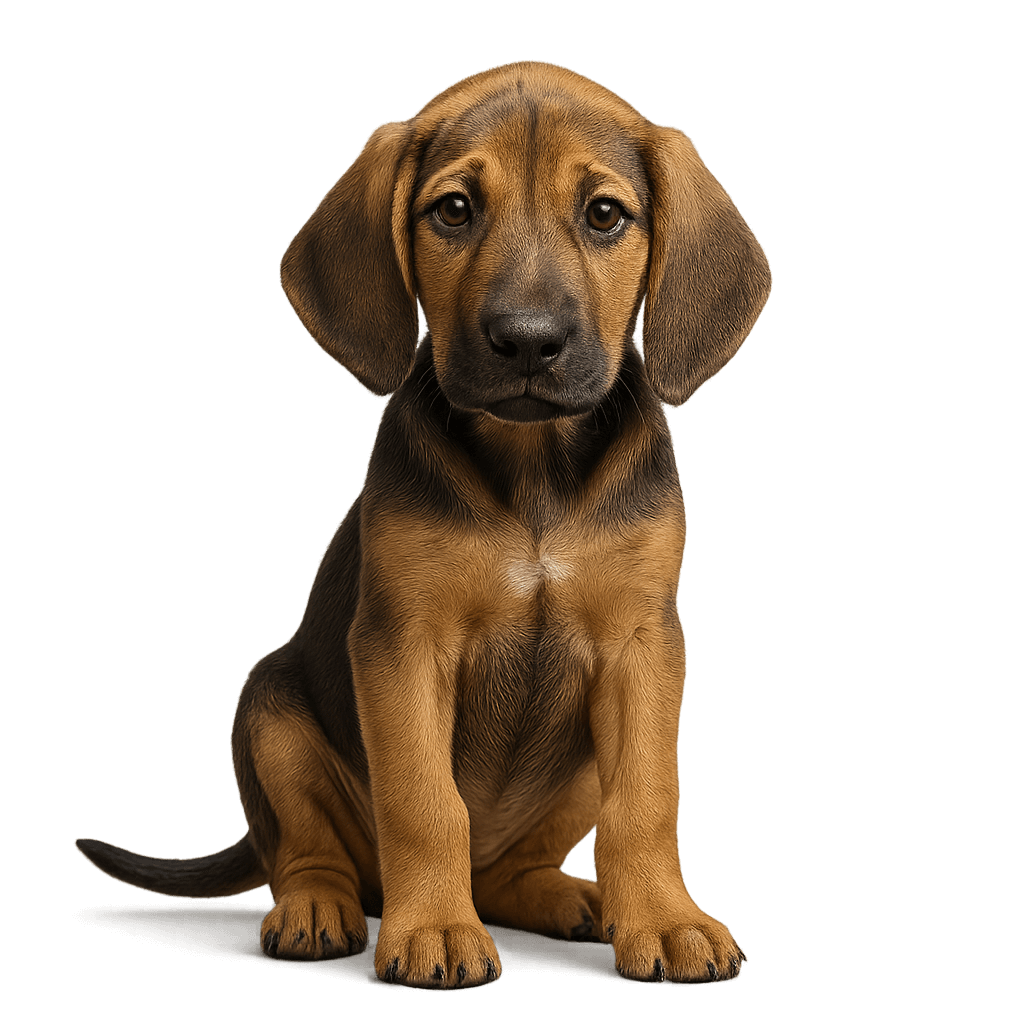
This mix will almost certainly be a large, athletic dog with long legs and a deep chest. You’re looking at anywhere from 60-100 pounds depending on which parent they favor, with height ranging from 24-29 inches. The build could lean toward the Bloodhound’s heavier bone structure or the Greyhound’s lean, aerodynamic frame—there’s considerable variation even within the same litter.
The coat will likely be short and smooth, though it may be slightly denser than a Greyhound’s if the Bloodhound genes dominate. Coat colors vary widely—black and tan, liver and tan, red, brindle, fawn, or combinations thereof. The ears might be the long, droopy Bloodhound type, semi-pricked, or somewhere in between. Facial features could include loose skin and wrinkles from the Bloodhound side, or the refined, narrow head of the Greyhound.
This is where things get interesting. You’re combining a determined, vocal, somewhat stubborn tracker with a quiet, sensitive, independent sprinter. The result could be a dog that’s focused and driven when working, but calm and gentle at home. Or you might get a dog that’s conflicted between nose-down tracking and visual scanning, creating an animal that’s easily distracted by both scents and movement.
In my opinion, the best-case scenario is a dog that inherits the Bloodhound’s friendliness and the Greyhound’s calm demeanor, giving you a gentle, affectionate companion with impressive athletic abilities. The challenging scenario is a dog with the Bloodhound’s stubbornness and vocalization combined with the Greyhound’s prey drive and sensitivity—that requires experienced handling. Most will fall somewhere in the middle, being loyal and devoted to their family while needing consistent training and proper socialization.
Let me be clear: this mix needs substantial daily exercise, but the type matters as much as the duration. You’re looking at minimum 60-90 minutes per day, but it needs to be varied. A Bloodhound Greyhound mix will benefit from walks that allow sniffing and scent work, combined with opportunities for short sprints in a safely enclosed area.
What concerns me about this cross is the potential for frustration if their dual nature isn’t properly addressed. These dogs need both nose work and physical running. A long walk where they can investigate scents satisfies the Bloodhound side, while a secure area where they can safely sprint satisfies the Greyhound instincts. Without both, you’re likely to see behavioral issues emerge.
Here’s what I’d recommend for exercise variety:
The Greyhound’s thin skin and low body fat means this mix may need a coat in cold weather, and they should never be off-leash in unfenced areas—that prey drive can override even solid recall training when something catches their eye or nose.

Both parent breeds were developed to work independently of their handlers to some degree. Bloodhounds follow scent trails on their own initiative, and Greyhounds make split-second chase decisions without human input. This means your mix will likely have an independent streak that requires patience and consistency to work with, not against.
Traditional obedience training that focuses on immediate compliance can be frustrating with this cross. What I find works better is relationship-based training that gives them a reason to cooperate. Use their natural drives—scent work for the Bloodhound side, chase games (with control) for the Greyhound side—as rewards and motivators.
Let’s talk honestly about recall. A Bloodhound on a scent trail or a Greyhound chasing prey is essentially deaf to human commands—their instincts completely override training in those moments. Your mix will likely inherit at least some of this, making reliable off-leash recall extremely challenging.
This isn’t a dog for off-leash hiking unless you’re in extremely remote areas where the risk of them encountering wildlife or running into danger is minimal. Even then, I’d hesitate. A long line for training is your friend here—it gives them freedom while maintaining safety. If you want a dog for off-leash adventures, honestly, this probably isn’t your mix.
This mix needs space, both indoors and out. While Greyhounds adapt surprisingly well to apartments, the Bloodhound side brings size, potential vocalization, and energy that makes apartment living challenging. A house with a securely fenced yard is ideal—and I emphasize “securely” because Bloodhounds can be escape artists when following a scent, and Greyhounds can clear surprisingly high fences when motivated.
The fence needs to be at least 5-6 feet tall with no gaps at the bottom. These dogs are athletic enough to jump and determined enough to dig or squeeze through openings. What I’d be most concerned about is the combination of the Bloodhound’s problem-solving abilities with the Greyhound’s athleticism—that’s a dog that can figure out how to escape and has the physical capability to do so.
Indoor space matters too. A large dog that may want to sprint occasionally needs room to move. They’ll likely be calm indoors most of the time, especially if properly exercised, but they’re not suited to cramped quarters. You’ll also need to consider drool potential—if your mix inherits the Bloodhound’s facial structure, drool towels become part of your décor.
The Bloodhound Greyhound mix potentially faces health issues from both parent breeds. From the Bloodhound side, you’re looking at risks of bloat (gastric torsion), hip dysplasia, ear infections due to those long ears, and eye problems including entropion and ectropion. From the Greyhound side, there’s sensitivity to anesthesia, potential for osteosarcoma (bone cancer), and heart issues.
The deep chest that both breeds share makes bloat a serious concern—this is a life-threatening emergency where the stomach twists on itself. Feed multiple smaller meals rather than one large one, avoid exercise immediately before and after eating, and learn the symptoms so you can act quickly if it occurs. Some owners opt for preventative gastropexy surgery where the stomach is surgically tacked in place.
Greyhounds are notorious for having unusual blood work values compared to other breeds—lower thyroid levels, different red blood cell counts—that can be mistaken for disease when they’re actually normal for sighthounds. If your mix inherits this, it’s crucial to find a vet familiar with sighthound bloodwork, otherwise you might end up with unnecessary treatments. Similar to a Cane Corso Bloodhound mix, this cross benefits from working with a veterinarian experienced with large, deep-chested breeds.
Expected lifespan is likely 10-13 years with proper care, though this varies based on size and which health issues emerge. Regular vet checkups, maintaining a healthy weight, and appropriate exercise all contribute to longevity.
Here’s some good news: grooming is relatively straightforward. The short coat requires only weekly brushing to remove dead hair and distribute skin oils. Both parent breeds are moderate shedders, so expect some hair around your home but nothing like a double-coated breed.
The potential challenges are elsewhere. If your mix has Bloodhound-type ears, they’ll need regular cleaning and inspection to prevent infections—those long, droopy ears trap moisture and create the perfect environment for bacteria and yeast. Check them at least weekly, clean as needed with appropriate ear cleaner, and dry them thoroughly after baths or swimming.
Nail trimming is essential for a dog this size. Long nails affect gait and can cause joint problems over time. If your mix inherits the Greyhound’s sensitive nature, start nail handling early and go slowly to build positive associations. Dental care matters too—brush teeth regularly to prevent periodontal disease, which can affect overall health as dogs age.
One practical consideration: if your mix has the Greyhound’s thin skin, they’re more prone to cuts and tears during active play or running through brush. Keep a first aid kit handy and learn basic wound care. They may also need sweaters or coats in cold weather—that lack of body fat and short coat means they feel the cold more than heavily coated breeds.
Both parent breeds can be good with children when properly socialized, though for different reasons. Bloodhounds are typically patient and tolerant, if somewhat clumsy due to their size and enthusiasm. Greyhounds are usually gentle and calm, though they can be startled by sudden movements or loud noises.
Your mix will likely do well with older children who understand how to interact respectfully with dogs. With very young children, supervision is essential—not because of aggression concerns, but because a large, potentially clumsy dog can accidentally knock over small kids. Teach children not to bother the dog while eating or sleeping, and always supervise interactions.
This is where you need to be realistic. The Greyhound’s prey drive toward small, fast-moving animals is deeply ingrained. Many Greyhounds live successfully with cats and small dogs, especially if raised with them, but some never become trustworthy around small pets. The Bloodhound is typically more tolerant and social with other animals.
Your mix could go either way. Best-case scenario: they inherit the Bloodhound’s easy-going nature with other pets and only have mild chase instinct. Challenging scenario: they have strong prey drive and see cats, rabbits, and small dogs as things to pursue. Early socialization helps, but it won’t override genetics entirely. If you have small pets, meet any potential puppy’s parents and ask detailed questions about their behavior around small animals.
With other dogs their size, most will do well. Both parent breeds are typically non-aggressive toward other dogs, though individual personality always varies. Dog parks might be tricky if your mix has strong prey drive—the sight of small dogs running could trigger chase behavior even if they have no aggressive intent.

Let’s be honest: this is a rare mix that you won’t find easily. There aren’t breeders specifically producing this cross, so most occur accidentally or through small-scale intentional breeding by individuals. This means you’ll likely need patience and flexibility in your search.
Check breed-specific rescues for both Bloodhounds and Greyhounds—they sometimes take in mixes of their breeds. Greyhound adoption organizations, especially those working with retired racing dogs, occasionally have mixes available. General shelter and rescue searches through platforms like Petfinder or Adopt-a-Pet can turn up surprises, though you might need to set up alerts and wait.
If you find a breeder producing this mix, vet them carefully. Ask about health testing on the parents (hip evaluations, cardiac exams, eye exams), why they’re breeding this particular cross, and what they do to socialize puppies. Responsible breeding includes genetic health screening, appropriate puppy socialization, and lifetime support. Prices would likely range from $500-$1,200 if you find a breeder, though adoption fees typically run $100-$400.
Be prepared for the possibility that you might not find this exact mix. Consider whether other combinations might meet your needs—perhaps a Bloodhound mix with different characteristics, or working with a retired racing Greyhound that already has the calm, gentle nature you’re seeking.
A large, athletic dog comes with corresponding expenses. Initial costs include adoption or purchase fees, initial veterinary care (vaccines, spay/neuter if not already done, microchipping), supplies (crate, bed, leashes, bowls), and puppy training classes if you’re getting a youngster. Budget $1,000-$2,000 for initial setup.
Annual costs include food ($500-$800 yearly for quality large-breed food), routine veterinary care ($300-$600 for annual exams, vaccines, heartworm and flea prevention), grooming supplies ($100-$200), and miscellaneous expenses like toys and treats. That’s roughly $900-$1,600 per year in predictable costs.
The unpredictable expense is medical issues. Deep-chested breeds can face emergency bloat surgery ($1,500-$7,500). Hip dysplasie might require management or surgery. Cancer treatment, if needed, runs into thousands of dollars. Pet insurance is worth considering for this mix, especially given the bloat risk and the potential for expensive genetic conditions. Alternatively, maintain an emergency fund of several thousand dollars for unexpected veterinary needs.
Let me lay out who this mix works for and who should look elsewhere. This is the right dog for you if you’re an active person with experience handling large, independent dogs, you have a securely fenced yard, you’re committed to daily exercise and mental stimulation, and you understand that scent and prey drive will require management throughout the dog’s life.
You’ll appreciate this mix if you want a companion for hiking (on leash), running partners for controlled sprints, or if you’re interested in scent work sports. If you value a dog that’s affectionate but not clingy, athletic but calm indoors when exercised, and you can handle some stubbornness with patience and humor, this could be a great match.
This is not the right mix if you want reliable off-leash freedom, need a dog for small living spaces, lack time for substantial daily exercise, want easy trainability with quick obedience, or have small pets that the dog might view as prey. First-time dog owners should be cautious—this isn’t an impossible first dog, but it’s definitely challenging without guidance.
What concerns me most about recommending this mix is the unpredictability. With established purebreds or common mixes, we have more data on likely outcomes. This particular cross is rare enough that each dog is somewhat of an unknown. If you need predictability in temperament and behavior, a purebred or more common mix might be a better choice.
Success with this mix requires understanding that you’re working with hunting instincts, not disobedience. When your dog ignores you because they’re tracking a scent or locked onto movement, it’s not spite—it’s genetics doing exactly what thousands of years of selection created.
Start training early with positive reinforcement methods. Harsh corrections will shut down the Greyhound’s sensitive side and just make the Bloodhound more stubborn. Focus on building a strong relationship where cooperation benefits them. Use their natural drives as rewards: scent games for successful recalls, controlled chase games with flirt poles, and food rewards for dogs that inherit the Bloodhound’s food motivation.
Teach a solid “leave it” cue and practice it extensively. This gives you a tool to interrupt prey drive or scent tracking before they’re completely locked in. It won’t work once they’re in full pursuit, but it can prevent them from reaching that state. Practice in gradually more distracting environments, always setting your dog up for success rather than testing them to failure.
Consider structured nose work or tracking classes. This gives an appropriate outlet for scenting drives while building teamwork between you and your dog. It’s mentally exhausting in the best way, channeling natural instincts into a controlled activity. For the Greyhound side, lure coursing or controlled chase games satisfy the need to run and pursue without creating dangerous situations.
The Bloodhound Greyhound mix is a fascinating combination that brings together two specialized hunting breeds into one athletic, independent, and potentially challenging companion. This isn’t a mix for everyone, and I won’t pretend otherwise. The unpredictability inherent in any cross, especially one this rare, means you need flexibility and commitment to work with the dog you get rather than the ideal you imagined.
What draws me to this mix is the potential for a dog that’s both driven and calm, capable of impressive physical feats while being gentle and affectionate with their family. A dog that engages fully with the world through their nose and eyes, experiencing their environment with an intensity most breeds don’t approach. That’s beautiful when properly channeled, frustrating when not.
If you’re considering this mix, spend time with both parent breeds if possible. Talk to Bloodhound owners about living with a dog that follows their nose obsessively. Spend time around Greyhounds to understand their prey drive and sensitivity. Read about both breeds extensively. The more you understand what you might be getting into, the better prepared you’ll be to provide the life this unique mix deserves. When the match is right, a Bloodhound Greyhound mix can be an incredible companion for an active, patient owner who appreciates dogs with strong instincts and independent spirits.


